

A Staple in Every Home
This report is password protected. Please enter the password to continue.
This report is password protected. Please enter the password to continue.
Associated British Foods delivers staples in every home while supporting good jobs and a stronger economy. We are an internationally recognised business, operating across food, ingredients and retail markets with a clear and enduring purpose: to provide safe, nutritious and affordable food, alongside clothing that delivers outstanding value for money. ABF combines global scale with strong commitment to communities, keeping food and clothing affordable for millions of customers every day while supporting communities, industries and supply chains that make the United Kingdom more resilient.
ABF is proud to be not just a major employer but for many people their first step into the world of work.
In the UK alone, ABF employs over 44,000 people through its network of more than 190 Primark stores and major operations including AB Agri, British Sugar, Jordans and Westmill. From chemical engineers in Newark to high street jobs in Liverpool ABF is proud to be an employer that invests in people.
The scale of this employment footprint means ABF plays an important role in supporting communities and local economies across the country. More people work for ABF in the UK than in the entire life insurance, television programme production or pharmaceutical industries in Great Britain. Beyond direct employment, the company’s extensive supply chains and partnerships sustain thousands of additional jobs across agriculture, manufacturing, logistics and retail.
ABF’s commitment to rural economies is particularly significant. In 2025, the company spent £1.3 billion with approximately 2,600 British agricultural businesses, directly supporting more than 4,300 jobs in the sector. Through long-standing relationships with farmers, suppliers and producers, ABF helps maintain resilient domestic supply chains and supports rural economies across the country.
The company’s brands are also part of everyday life for millions of households. Nine out of ten UK households purchase ABF grocery brands, including well-known names such as Kingsmill, Silver Spoon, Jordans, Dorset Cereals and Twinings. This strong connection with consumers underlines ABF’s contribution to UK communities and households.

ABF makes a substantial contribution to economic growth and productivity across the United Kingdom.
The company directly contributes £1.9 billion to the UK economy each year — exceeding the economic contribution of several major UK industries, including iron and steel production, animal feed manufacturing and the fishing sector.
The wider impact of ABF’s operations extends significantly beyond its direct activities. Through its own operations and extensive supply chains, the company contributes an estimated £6 billion in total economic output to the UK economy and supports approximately 104,000 jobs annually. More than 59,500 additional jobs are sustained through ABF’s supply chains alone. For every job directly supported by ABF, a further 1.3 jobs are supported elsewhere in the wider economy.
ABF’s diverse business model — spanning food production, ingredients, agriculture and retail — provides resilience and stability across multiple sectors of the economy. This diversity allows the business to continue investing for the long term while supporting productivity, trade and regional economic growth throughout the UK.

More people work for ABF in the UK than the following industries in Great Britain:


ABF contributed £300 million in capital investment to the UK economy in 2025, with


Today, ABF employs 138,000 people across 56 countries worldwide, with customers in over 100 countries.1

ABF’s direct economic contribution of £1.9bn to the UK exceeds that of some UK industries:


Through its own activities and extensive supply chain, ABF contributes a total of £6.0 billion of economic output to the UK economy per year and supports 104,000 jobs.

ABF employs more than 44,000 people across the country, with over 190 Primark stores and multiple sites operated by AB Agri, British Sugar, Jordans and Westmill, among others.


ABF’s activities sustain over 55,900 additional jobs in its supply chains. For every job supported by ABF, a further 1.3 jobs are supported in the wider UK economy.

ABF spent a total of £1.3 billion across 2,600 British agricultural businesses in 2025, directly supporting over 4,300 jobs in the sector.


Public First’s new research and economic modelling demonstrates the significant economic impact that ABF makes across the UK economy, in particular within the wider agri-food supply chain. Drawing on financial, headcount and supply chain data provided by ABF, Public First has quantified the impact of ABF’s presence in the UK, in terms of jobs and economic output. Economic output is calculated in terms of gross value added (GVA), a widely-used measure of the economic importance of different businesses and sectors. Public First has quantified:
The direct economic impact of ABF – economic output and jobs created directly by ABF at its sites across the UK.

The supply chain economic impact of ABF – economic output and jobs created by ABF’s supply chain spending, e.g. spending in the UK on agricultural products and ingredients, logistics, IT services and telecommunications, and professional services.
The employee spending economic impact of ABF – economic output and jobs created by ABF employees and employees along ABF’s supply chain spending money in the wider economy, e.g. on housing or retail.


In total, we estimate that ABF contributes £6.0 billion of economic output to the UK economy and supports 104,000 jobs per year.
Around £1.9 billion of this is ABF’s direct contribution to the UK economy, chiefly through employee remuneration, social security and contributions to pension schemes. A further £4.1 billion is generated through ABF’s purchases within its supply chain, and through employee spending from both ABF employees and employees in the supply chain.
ABF’s direct economic contribution exceeds that of the entire iron and steel industry in the UK (£1.8 billion), as well as the entire animal feed production (£1.6 billion) and fishing (£1.0 billion) industries in 2025.2
ABF directly employs over 44,000 workers, meaning that more people work for ABF in the UK than the entire Life Insurance (43,000), Television Programme Production (41,000) and Pharmaceutical (32,000) industries across Great Britain.3
In addition, ABF’s activities sustain over 55,900 additional jobs in its supply chains – including in food ingredients, engineering services and mechanical goods, and professional services such as testing and market research – and from employees spending money in the wider UK economy. This means that, for every job supported by ABF, a further 1.3 jobs are supported in the wider UK economy.
ABF has a significant presence across the UK’s entire food production and clothing supply chain, from the farm through to the retail shelf. ABF’s businesses spent a total of £3.8 billion across its suppliers in 2025.4 Its suppliers are numerous and diverse, ranging across food raw materials, packaging, logistics, professional and recruitment services, maintenance and repairs.
In an era of volatile global markets, climate change and increasing geopolitical instability, supporting British farmers is not just about sustaining an important domestic industry. It also helps to fulfil much wider national priorities: providing food security, protecting rural communities, and ensuring that the UK can access supply chains which are less susceptible to disruptive shocks. So, when ABF buys raw ingredients from a UK supplier, it is not just supporting the supplier’s activities – it is also helping to sustain a wider food ecosystem that confers numerous benefits for the UK economy.
Support for rural communities provides a high degree of economic and societal value. The UK government has estimated that the rural economy in England contributed £259 billion in GVA in 2023/24 (12% of the whole economy), with a higher concentration of businesses, greater business resilience and higher employment rates in comparison to urban areas.5 Research from the Country Land and Business Association (CLA) has identified that participation across rural communities has a potential social value of £2.5 billion per year, with a high Social Return on Investment (SROI)6 in rural community projects: for every £1 spent, between £2.54 and £2.78 is returned to society via improved health, reduced isolation, and better community cohesion.7
At the same time, domestic food production – to which ABF makes a significant contribution – brings value far beyond just the prices listed on supermarket shelves. It contributes to the UK’s food security by protecting its supply chains and providing a buffer against global food price shocks.


For ABF, sustainability is not a standalone initiative but a fundamental component of its devolved business model. With a clear ambition to achieve net zero by 2050 or sooner, the group empowers its individual businesses to develop localised, high-impact strategies that reflect their unique positions in the global supply chain. This approach ensures that improving sustainability is integrated into ABF’s core mission of providing affordable, high-quality food and clothing to millions of UK households.

Jordans Cereals, a premium brand within Jordans Dorset Ryvita (JDR) and Associated British Foods, depends on a dedicated network of UK farmers to provide the high-quality oats and rye required for its range of premium cereals. To ensure long-term sustainability, the business sources its grains through the Jordans Farm Partnership (JFP).
The JFP is a long-running collaborative UK programme involving Jordans, The Wildlife Trusts, Linking Environment and Farming (LEAF), and participating farmers. Each partner contributes specific expertise, ranging from habitat restoration knowledge to sustainable farming models. This initiative recognizes that improving farm biodiversity and soil health is essential for the long-term resilience of the supply chain. To participate, farmers receive a crop premium and must meet the JFP Standard, which requires:
This partnership delivers substantial business and nature benefits. For Jordans, it fosters supply chain resilience, in particular through improved soil health, which reduces risks associated with climatic variation such as erosion, flooding, and drought. We are continually evolving the programme to ensure we are keeping up to date with the latest requirements in this area. Our next phase will be widened to look at carbon and how it impacts our growers and businesses.
Restoring Biodiversity and Creating Resilient Ecosystems Since 2015.


Javi Exposito recently celebrated a 10-year service milestone, having started his career at Ryvita in his first-ever manufacturing role as a Quality Assurance (QA) technician. This initial position provided foundational insights into quality and compliance while demonstrating how different departments must work together as a team. After one year, Javi moved into operations as a Production Team Leader, where he began managing large teams and influencing key site KPIs. His progression continued with a promotion to Shift Manager, eventually taking responsibility for two different bakeries simultaneously—a role that required managing diverse skillsets and complex processes.
Three years later, Javi secured the role of Production Manager at Dorset Cereals, managing a larger team and overseeing factory finances with a strategic mindset. He has since joined the Site Leadership Team, adding Warehouse and Inventory to his responsibilities. As a senior leader, Javi now contributes to site-wide decision-making across Health and Safety, Food Safety, and People operations, while continuing to learn from experienced senior colleagues.
“Reflecting on how far I have come in 10 years has made me appreciate what Ryvita has done for me. I have been trusted, challenged, developed, and valued. My first role in QA gave me an insight not only into quality and compliance, but also how a manufacturing site works and the importance of working as a team. Since then, I have had the opportunity to lead large teams, become a decision-maker for factory finances, and learn from experienced senior leaders. For me, the support I have received is priceless.”


Since 2020, Allied Mills has partnered with Frontier Agriculture, an ABF joint venture, to deliver a five-year Wheat Sustainability Supply Project with a group of wheat growers in South East England. This initiative supports the adoption of more regenerative farming practices, such as crop rotation, minimal tillage and precision agriculture. All of these actions are aimed at improving soil health, supporting biodiversity and wildlife and reducing greenhouse gas emissions. Participating farmers receive a premium for their more sustainably grown wheat.
The sustainability impact of these initiatives is significant; the Wheat Sustainability Supply Project has demonstrated measurable environmental benefits. Emissions from participating farms were found to be 17% lower than standard UK wheat emission factors, with lower nitrogen fertiliser use identified as the most significant driver of emissions reduction. Nitrogen fertiliser accounts for over 60% of milling wheat’s carbon footprint. Based on these results, Allied Mills has extended the project to 2029 to further trial low-emission fertilizer technologies and nitrogen optimization strategies.
Allied Bakeries (sister company to Allied Mills) is also championing more sustainable sourcing by using LEAF Marque certified wheat for two of its Allinson’s lines: The Champion Wholemeal and Scandalous Seeds. The LEAF Marque is an environmental assurance programme, based on an Integrated Farm Management approach which focuses on nine principles including soil management and fertility, water management and landscape and nature conservation.

British Sugar’s factory at Wissington, Norfolk, is another example of ABF’s work to deliver sustainability through reducing carbon emissions. The Wissington site, the largest of British Sugar’s four factories, was first opened in 1925 and today processes over three million tonnes of sugar beet every year into approximately 400,000 tonnes of sugar and many co-products that are derived from the sugar production process.
Recent large-scale decarbonisation projects at the factory include the installation of a new evaporator, heat exchangers and processing equipment.8 This became operational at the start of the factory’s 2023/24 campaign operations and reduced the site’s sugar production steam demand by 25% in its first year alone.
Another large-scale project on site involves the installation of two new high-efficiency steam dryers which convert sugar beet pulp into animal feed, replacing older gas dryers.9 This has been a huge investment of £43 million from British Sugar, supported by a £7.5 million government grant. Construction began in 2025 and it is scheduled for commissioning in Autumn 2026. The steam drying project aims to achieve a reduction in direct (Scope 1) carbon emissions by 50,000 tonnes per year. This would be equivalent to a saving of the average yearly energy use of approximately 20,000 UK homes,10 or around 77,000 return flights from London to New York.11
In addition to supporting the UK’s progression to Net Zero, the Wissington factory directly supports 330 jobs and £40 million in GVA, as well as supporting the activities of 750 sugar beet growers from the local area.
The Wissington factory has an extensive supply chain which includes energy, chemicals, maintenance and repair services as well as contracted services and labour. Through this supply chain in combination with Public First’s in-house economic model, we estimate that the factory supports an additional £70 million of GVA and just under 1,000 jobs across the wider UK economy.
British Sugar is a high-quality employer where career progression opportunities are recognised. Around 80% of apprentices are still working within the business over a decade after starting their careers.

Elliott Fisher joined British Sugar in 1994 and has worked his way up through the business to become Site General Manager at the Wissington factory. Starting his career as a 16-year-old multi-skilled apprentice, Elliott has gone on to hold various roles including Process Technician, Shift Manager, Development Manager at British Sugar’s Cantley factory. He has also held a people development role, which included managing British Sugar’s apprenticeship schemes for a two-year period. After gaining international experience with the biofuel team, he now utilises decades of operational expertise to lead performance at one of the company’s primary processing facilities.
“British Sugar has supported me with many opportunities and experiences, helping me develop into my current role as Site General Manager at Wissington factory. That all started with an apprenticeship 26 years ago, and since day one with British Sugar I have never stopped learning or enjoying my work. I would very much recommend considering an apprenticeship to anyone thinking about their future career or getting started in a profession.”

Kathryn Grant joined British Sugar in 2008, after graduating with a Bachelor’s degree in chemical engineering from the University of Sheffield. Kathryn started her career on the company’s graduate Shift Performance Manager (SPM) scheme, and has since gone on to hold various roles including Process Manager, People Development Manager and Extraction APU Leader. Kathryn has brought in a 365-engineering approach to improve reliability performance and continued to secure investment in the area with the upcoming Brunswick Seeding being the latest addition. Kathryn was recently promoted to the role of Operational Support Manager at British Sugar’s factory in Newark.
“I think it’s important to have a platform to celebrate women in engineering and set out how we can continue to progress increasing representation in such an important and exciting industry. It’s important to me that people understand it is possible for them to achieve anything they set their mind to, and they shouldn’t feel limited by what society or they themselves may assume they are capable of. Developing others is a major focus for me, and getting out there to show people these amazing career paths is a great opportunity.”
ABF is a leader in driving agricultural innovation. For example, the National Milk Records (NMR) facility at Four Ashes, Wolverhampton, serves as a primary hub for agritech innovation within AB Agri – an ABF-owned international agri-food business. Since its acquisition by ABF in 2023, the business has continued its data-led technologies designed to improve dairy productivity, animal welfare, and supply chain transparency. The NMR facility directly supports just over 100 jobs, with a further 1,400 jobs supported through the supply chain, primarily through the procurement of consumables required for sample testing.
The NMR has undertaken significant investment over the last five years, in advanced manufacturing and product processes, which include genetic genotyping, diagnostic testing and DNA extraction. These are designed to improve disease identification, breeding, reduction in antimicrobial reliance and herd resilience. In addition to helping to raise the agricultural sector’s productivity, the NMR is a high-skills employer: just over 50% of the laboratory employees working at the site are university graduates.


Ashu Bassan joined National Milk Records (NMR) in 2018 as a Laboratory Technician and has progressed through a series of roles, including Laboratory Team Leader and Deputy Laboratory Manager. In 2023, she was appointed Day Shift Laboratory Manager, taking responsibility for day-shift laboratory operations, team leadership, and the delivery of consistently high-quality laboratory outputs. Her progression reflects both strong technical capability and sustained professional development within NMR.
Working within the dairy industry, Ashu is motivated by the direct contribution laboratory analysis makes to product quality and animal health. The diagnostic work carried out by NMR plays a critical role in disease identification and supports confidence across the dairy supply chain. Ashu also values the sector’s emphasis on precision, consistency, and evidence-based decision-making, which aligns closely with the requirements of laboratory science.
Ashu highlights NMR’s culture of continuous improvement as a key factor in her development, noting the ongoing opportunities to refine processes, improve efficiency, and maintain rigorous quality standards. Collaboration is central to her role, and she works closely with laboratory colleagues and customers to ensure accurate, timely, and reliable outcomes that support the wider dairy industry.
Through its AB World Foods business (ABWF), ABF exports a large value and range of food products across the globe, through internationally-recognised brands including Patak’s and Al Fez. ABWF exported a total of just under £67m of products outside of the UK in the financial year 2024/25, including well-known brands such as Patak’s Indian cooking sauces, spice pastes, chutneys and pickles.
The AB World Foods factory site in Leigh, Lancashire, is a key contributor to ABF’s export value and reach, with exports of £33 million alone in 2024/25, nearly half of the ABWF total. The Leigh site exports food products to 31 countries, which includes some of the largest UK export markets: the USA, France, Germany, Australia and Canada. Products exported from the Leigh site include cooking sauces, food pastes and kits, condiments, dry meal components and specialty ingredients.
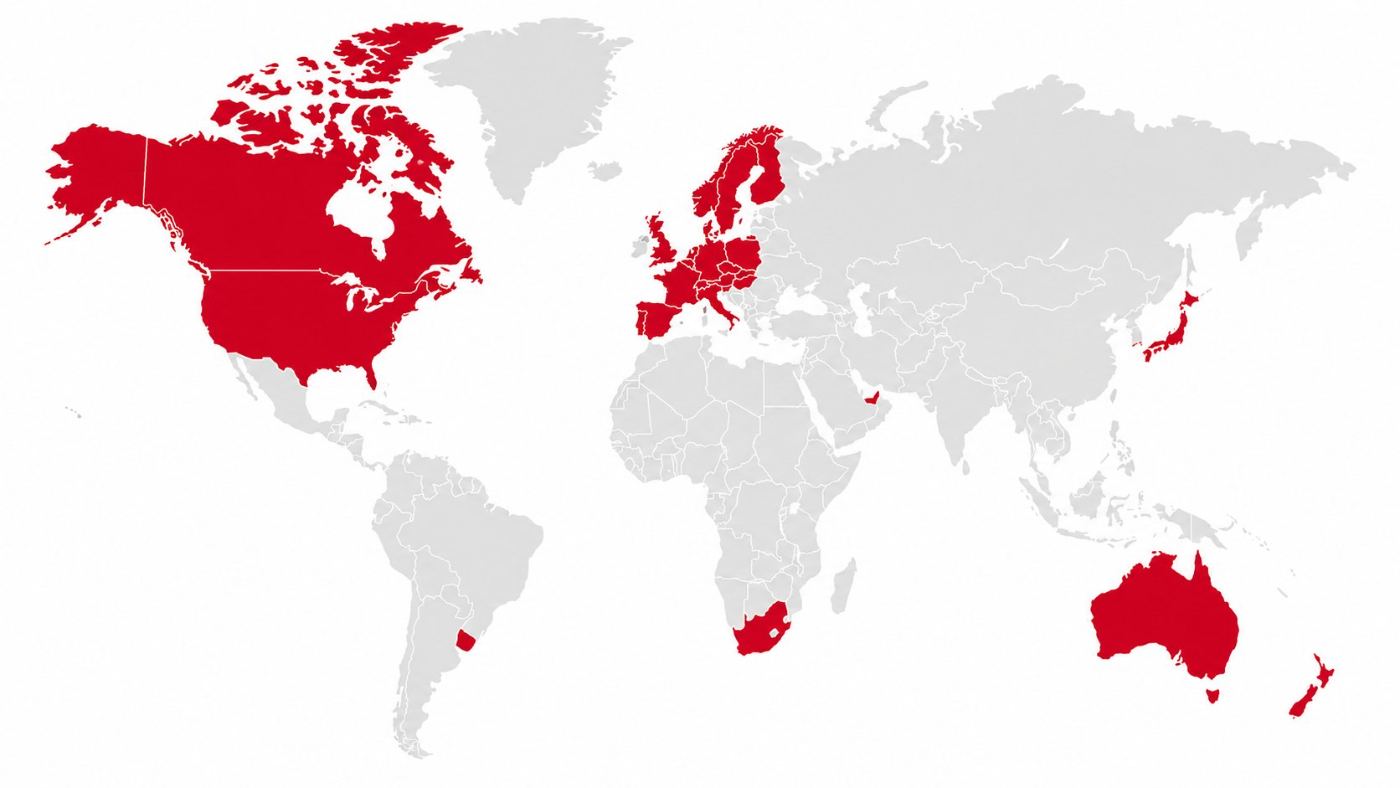
The AB World Foods Leigh site also makes a significant contribution to the UK economy in its own right. We estimate ABF’s wider economic contribution at Leigh to be £80 million, consisting of £40 million from the site’s own direct contribution with a further £40 million generated through the factory’s purchases within local supply chains. This supply chain includes a diverse range of products and services, including packaging, logistics, raw materials, machinery and warehousing.

Davide Burattinello joined AB World Foods in 2008 after moving from Italy to England. That same year, he learned from AB Mauri Italy that ABF had acquired Patak’s Foods. He submitted his CV, secured an interview, and joined the business initially as an agency worker before being offered a permanent role.
Davide began his journey as a Packaging Operator and steadily progressed through the organisation, moving from Line Technician to Team Leader. In 2014, he transitioned into pappadum production—one of the most advanced and unique manufacturing processes in Europe—and completed his first apprenticeship as a Manufacturing Team Leader. During this time, he led multiple improvement projects that paved the way for the creation of the site’s first Process Improvement Leader role.
This role marked Davide’s introduction to Continuous Improvement, earning his Lean Six Sigma Yellow Belt and sparking a strong commitment to self-development. That journey led to his current position as Site Operational Excellence Lead, alongside achieving his Lean Six Sigma Black Belt and statistical analysis. Today, Davide applies these skills to support operations teams to deliver site KPIs, while playing a significant role in supporting the site to continuously improve processes and deploying the site’s automated OEE recording system.
Through this work, Davide discovered the potential of AI and automation, motivating him to undertake a further apprenticeship as “Artificial Intelligence and Automation Practitioner”. This is expanding his expertise in emerging technologies and strengthening his contribution to business improvement.
“When I think back to 2008, walking into a manufacturing area for the very first time and starting my first shift on a production line, I could never have imagined where that journey would lead. Eighteen years later, AB World Foods has become more than a workplace—it has become a second home. This business has not only been a great place to work, but a place where I’ve been genuinely supported, developed, challenged to evolve, and valued as an individual. Today, I’m part of the Site Lead Team, I contribute to business strategy and decision-making—something that would have been unthinkable to me all those years ago. The support I’ve received has been instrumental in shaping both my career and personal growth, and for that, I remain deeply grateful”

Declan joined AB World Foods in 2016 as a Multi-Skilled Engineering Apprentice, beginning his engineering career at the Leigh site. The apprenticeship provided a strong technical foundation and broad operational exposure, supporting his early development within the business. His commitment and performance were recognised when he was awarded ‘Apprentice of the Year’.
In 2020, Declan progressed to Shift Engineer, taking responsibility for plant reliability, fault response, and operational support. He was promoted to Lead Engineer in 2022, where he led a team of engineers and further developed his leadership capabilities while contributing to safe, efficient site performance.
In 2026, Declan was appointed Engineering Team Manager, leading a team of 22 colleagues, including six engineering apprentices. In addition to overseeing the engineering maintenance function, he is responsible for the engineering apprentice development programme, supporting the growth and progression of emerging engineering talent. Having started his own career as an apprentice, Declan brings first-hand experience to developing capability, strengthening succession, and supporting long-term skills development at AB World Foods.
“I started my career at AB World Foods as an apprentice, and the opportunities I’ve been given to learn, develop, and progress have shaped both my career and my confidence. The business consistently invests in its people, and I’m proud to now be in a position where I can support and develop the next generation of engineers.”
Public First’s previous report for Primark in 202414 highlighted the importance of the UK high street to communities and the wider economy:
Social and Community Value: High streets serve as essential gathering places where people socialise, build community values, and interact with others. For many, visiting shops is one of their most frequent forms of human interaction.

Civic Pride and Identity: 82% of the UK public believe the high street is important for fostering pride in their local area.

Economic Contribution and Employment: A successful high street provides stable jobs and drives significant economic value. High streets are particularly critical in areas with historically low employment, where large retailers can act as major employers.
Support for Local Businesses: Vibrant high streets create a “hand-in-hand” ecosystem where large “anchor” stores draw in footfall that benefits smaller independent retailers, cafes, and restaurants.

Accessibility: High streets provide essential physical access to goods for those who do not shop online, a factor cited as important by over half of people aged 65 and over.
Primark was also identified by Public First to have a substantial positive impact on the UK high street, generating additional footfall and retail spending across other local businesses:
Primark’s flagship Birmingham High Street store opened in April 2019 on the former Pavilion shopping centre site. It is a five-floor store totalling about 160,000 sq ft, which still holds the Guinness World Record for the largest retail fashion store in the world. Public First previously estimated that the Birmingham store has a substantial impact on its high street:
It directly employs around 750 people locally and supports 2,100 jobs in an area with 13.8% unemployment in 2024, compared with 3.8% for the UK as a whole.

As a result of its activity, Birmingham Ladywood ranks among the top five constituencies by Primark’s value added, generating £120 million in GVA.
It draws an estimated 80,000 visitors per week to the city centre, acting as a major high-street anchor destination, with tourists taking special bus trips to the store.
Primark also helps support the UK high street through its “Click & Collect” service, whereby customers can buy or order goods from Primark’s website and collect them from a local branch. In visiting stores to collect items, customers may then also visit other shops and make purchases elsewhere, driving higher footfall to the wider high street.
The Primark store in Hartlepool is a good example of how the introduction of Click & Collect is both driving higher sales and helping to support high street footfall. Following Click & Collect sales commencing in mid-2025, its share of total store sales has grown strongly, rising steadily to 6.6% of sales by March 2026.
The Hartlepool Primark generated £6.8 million of sales in 2025-26, of which just over £150,000 were from Click & Collect. Public First’s previous research for Primark identified that for every £10 spent in a Primark store, a further £3.60 is spent in other stores, restaurants and cafes. From this, it is estimated that Primark generated an additional £2.4 million for Hartlepool’s high street in 2025/26 – with an increasing share due to customers using Click & Collect rather than simply buying online elsewhere and receiving items by home delivery.
As with the Birmingham store, Primark’s Hartlepool store also generates an economic contribution to the wider UK economy. We estimate that the Hartlepool store generates a direct GVA contribution of £2.5 million alongside directly employing 60 workers.

Associated British Foods is a diversified international food, ingredients and retail group with operations in 56 countries across Europe, Africa, the Americas, Asia and Australia. We are united in our purpose: to provide safe, nutritious and affordable food, and clothing that is great value for money. With the breadth of our business, our brands and global reach, ABF aims to consistently deliver long-term value to its stakeholders, from our customers, employees and suppliers to our shareholders.
Public First is a policy, research, opinion and strategy consultancy. We work with global companies, governments, start-ups, institutions and foundations around the world to tackle major public policy and strategic challenges.
Public First quantified ABF’s direct impacts (ABF GVA and jobs, using internal and procurement data provided by ABF), indirect impacts (GVA and jobs supported along ABF’s supply chains) and induced impacts (GVA and jobs from employees spending money in the wider economy). The latter two are derived from Public First’s in-house economic model, based on ONS Input Output tables, which detail the interrelationships between different parts of the economy.


